

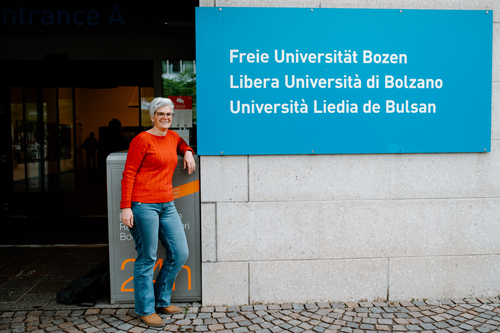
Klaudia Resch, a political scientist with a Master’s in the Economics of Cooperation, shares her deep insights into why democratic business models are the future of sustainable design. In her seminars at the Free University of Bozen-Bolzano, she bridges the gap between idealistic creativity and the robust economic structures of cooperatives.
The Essence of a Cooperative
According to Klaudia, a cooperative is much more than a business; it is a democratic association of individuals who unite to meet their common economic, social, or cultural needs. 'The fundamental principle is one person, one vote,' she explains, emphasizing that in a cooperative, people—not capital—are at the center of decision-making.
Why Design Needs Cooperatives
In the world of eco-social design, many projects struggle to survive after the initial creative spark. Klaudia argues that the cooperative model provides the necessary framework for long-term sustainability. It allows designers to work collectively, share risks, and maintain a focus on social impact rather than purely maximizing profit.
The Practical Challenge: From Theory to Foundation
In her university seminars, students don't just learn about cooperatives—they simulate founding one. Klaudia highlights that the economic side is often the biggest hurdle for creatives. 'The founding process in Italy requires at least three members and a minimum capital of only 25 Euros per person,' she notes, making it an accessible path for young entrepreneurs, provided they can master the business plan.
Education as a Catalyst for Change
By teaching the next generation of designers how to structure their work democratically, Klaudia is helping to build a resilient economy in South Tyrol and beyond. Her work proves that when design meets the cooperative spirit, 'Zebras'—businesses that are profitable yet deeply committed to society—can truly flourish.